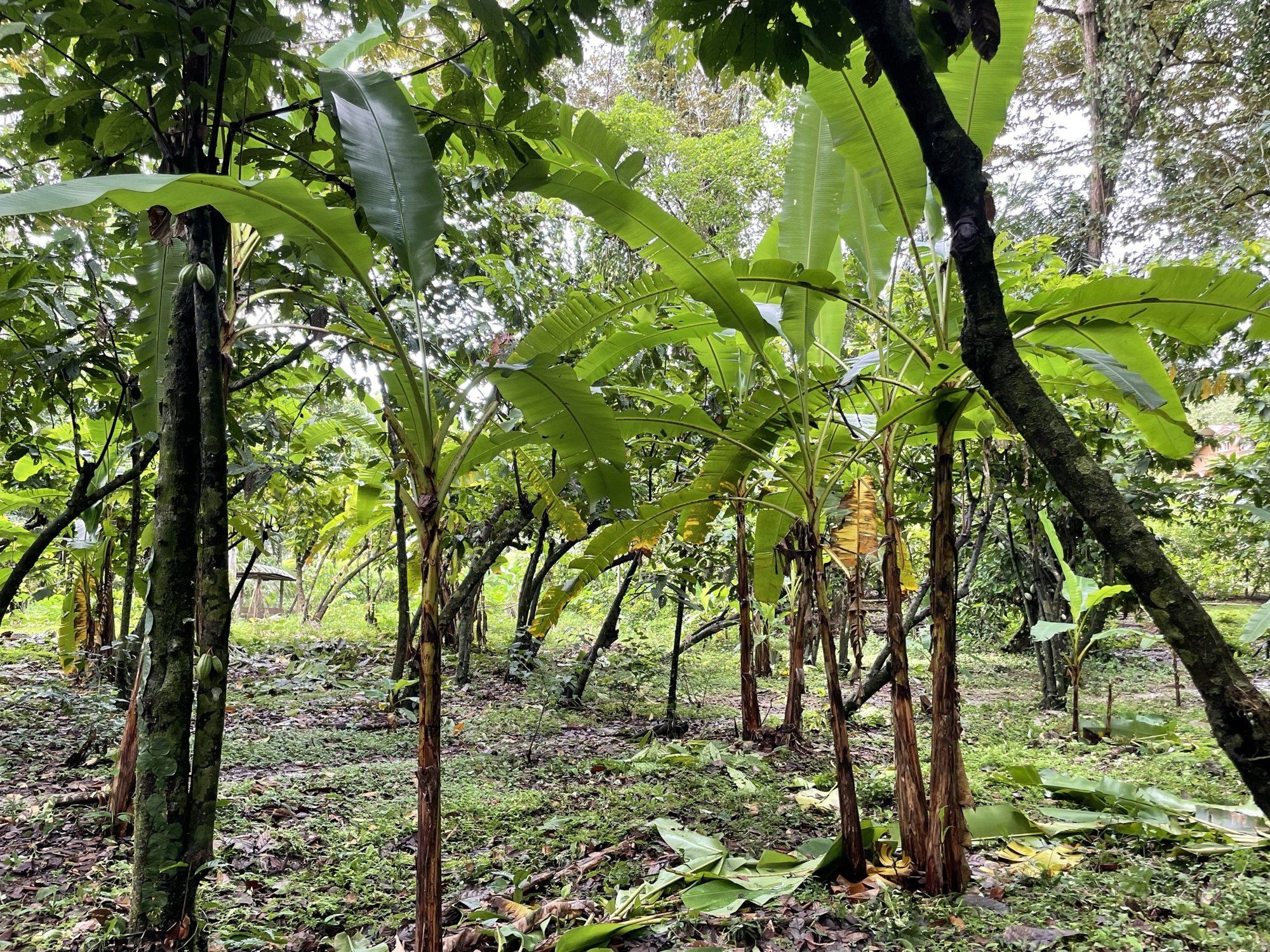
The Ngäbe-Buglé comarca is Panama’s largest indigenous territory and, with neighbouring Bocas del Toro, holds more than nine in ten hectares of the country’s cacao. The Caribbean side of the comarca shares the same wet lowland climate as Almirante and the same agroforestry habit: cacao planted under banana, plantain and native trees, harvested with a hooked pole and carried out in sacks. Most of COCABO’s members are Ngäbe, and nearly all of the organic, fair-trade beans that leave Panama for Europe and the United States start in these communities. Growers average a few hectares each and sell wet or dry beans to the cooperative or to intermediaries, which is why the price debate and the push for quality matter more here than anywhere else.
What to know
- About 95% of COCABO’s roughly 1,400 members are indigenous, mostly Ngäbe-Buglé and Naso.
- Nearly 4,400 hectares in the cooperative are certified organic.
- Cacao sits inside a food forest with banana, peach palm, pineapple and timber, not in rows.
- Access is by boat or long dirt roads; tours usually start from Almirante.
Visiting
The Oreba chocolate tour is run by a Ngäbe community a short boat ride from Almirante and is the easiest way in. Ask before photographing people, and buy chocolate on site.
- Oreba Chocolate Tour, Ngäbe community near Almirante, from the Torres dock. The best-known community-run tour in the archipelago: organic cacao under jungle shade, a hike, a demonstration of the whole process and lunch with the family. Website →
Sources: Equal Exchange, COCABO profile · Swiss Chocolate, Cocabo and the EUDR · Newsroom Panama, Panama’s cacao rush (2026)